
Types of Donations for Nonprofits and How to Build a Diversified Funding Model

.avif)
Understanding the Full Range of Donation Types
For nonprofit organizations, consistent and reliable funding is essential to delivering on mission. While direct cash and online donations remain a core part of digital fundraising, organizations that rely on a narrow set of funding sources expose themselves to unnecessary risk. Economic shifts, donor behavior changes, and seasonal volatility can all disrupt revenue when fundraising is not diversified.
Today’s nonprofit leaders must understand and actively support multiple types of donations, not as optional add-ons, but as part of a sustainable fundraising strategy. This guide provides a clear, practical breakdown of the diversified mix of funding sources nonprofits can receive and how each contributes to long-term financial stability.
Rather than focusing solely on short-term revenue, a diversified approach to giving helps organizations strengthen donor relationships, expand access to support, and plan with greater confidence.
Beyond the Cash Contribution
Most nonprofits are built around cash and online giving. While essential, these methods represent only one segment of the broader philanthropic landscape. Donors give in different ways depending on their financial situation, tax considerations, life stage, and goals.
A well-rounded fundraising program accounts for this reality by supporting a range of donation types, including recurring gifts, asset-based contributions, corporate support, and planned giving. Understanding these options allows nonprofits to meet donors where they are and reduce friction in the giving process.
Importantly, expanding donation types is not about complexity. It is about removing barriers to generosity and ensuring supporters can contribute in the way that works best for them.
Why Diversifying Donation Types Matters
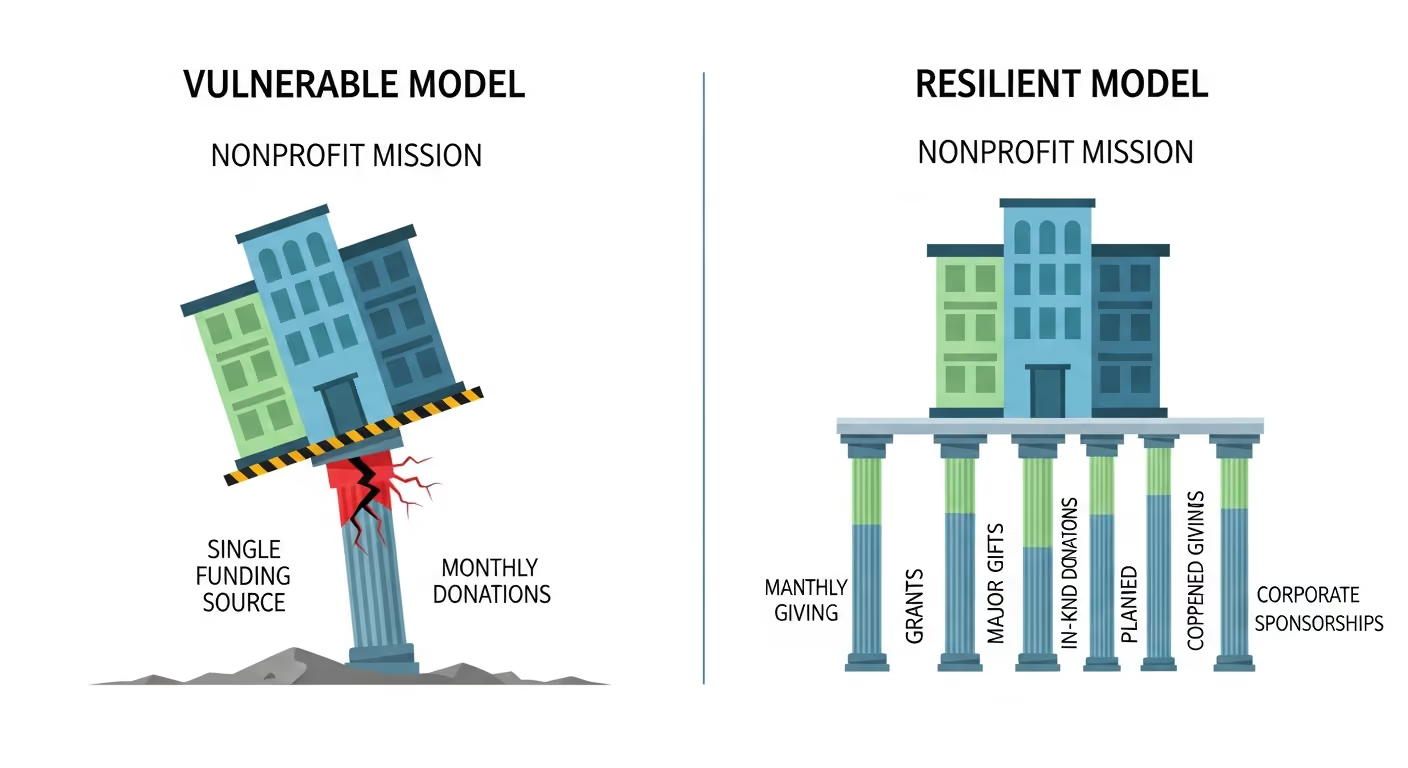
A diversified funding strategy creates a stable foundation, insulating a nonprofit from the volatility of relying on a single revenue stream.
Relying heavily on a single revenue source, such as annual appeals or a small number of grants, creates vulnerability. Changes in donor priorities, funding cycles, or economic conditions can quickly impact programs and staffing.
Diversifying donation types helps nonprofits:
- Create more predictable and resilient revenue streams
- Reduce dependence on any one funding source
- Support both short-term needs and long-term sustainability
- Attract donors who may not give through traditional cash donations
Organizations with diversified fundraising models are better positioned to invest in infrastructure, expand programs, and adapt to change without disrupting mission delivery.
What This Guide Covers
This guide is designed as a practical reference for nonprofit leaders, development teams, and fundraising professionals. It focuses on education over promotion and provides clear explanations of how different donation types work in practice.
You’ll learn:
- Why donation type diversification is essential for nonprofit sustainability
- The core donation types every nonprofit should understand and support
- High-value and asset-based donations that can significantly increase revenue
- Planned and legacy giving options that support long-term impact
- Practical considerations for soliciting, processing, and stewarding each type of donation
By the end of this guide, you’ll have a clear framework for evaluating, expanding, and strengthening your organization’s fundraising approach, grounded in the realities nonprofit leaders face every day.
The Strategic Imperative: Why Diversifying Donation Types is Essential
For nonprofit organizations, financial stability is not optional, it is required for sustained impact. Organizations that rely on a narrow set of fundraising methods are more exposed to economic shifts, donor attrition, and changes in funding priorities.
Diversifying donation types allows nonprofits to move from reactive fundraising to a more resilient, strategic model. By supporting multiple ways to give, organizations reduce risk, stabilize revenue, and better align with how donors prefer to contribute.
Building Financial Resilience and Stability
Nonprofits that depend heavily on a single funding source, such as annual appeals or a small number of grants, face significant vulnerability. A diversified fundraising model spreads risk across multiple revenue streams.
For example:
- Recurring donations provide predictable, ongoing income
- Major gifts can support program expansion or one-time initiatives
- Stock, real estate, and planned gifts can generate larger, often unrestricted contributions
Together, these donation types help nonprofits maintain consistent service delivery and plan with greater confidence, even during economic uncertainty.
Reaching a Broader Donor Base
Donors differ in financial capacity, life stage, and motivation. Limiting fundraising to cash donations alone can unintentionally exclude supporters who are willing, but not able, to give that way.
Offering multiple donation options allows nonprofits to engage:
- Donors who prefer monthly giving for budgeting and convenience
- Supporters motivated by tax-efficient giving, such as stock or IRA distributions
- Donors interested in legacy or estate-based contributions
Expanding donation types increases access to support while building a more diverse and invested donor community.
Improving Donor Engagement and Retention
Different donation types offer different benefits to donors, including tax advantages, estate planning opportunities, and the ability to make larger or more strategic gifts. Effective stewardship is one of the strongest drivers of donor retention.
When nonprofits understand these benefits and steward gifts appropriately, through timely acknowledgments, clear communication, and personalized outreach, they strengthen donor relationships. This leads to higher retention, repeat giving, and long-term loyalty.
How Nonprofits Can Use Multiple Donation Types Strategically
Nonprofits grow fundraising revenue by aligning donation types with donor behavior and organizational capacity.
Effective strategies include:
- Segmenting donors using historical giving patterns and donor data enables more relevant outreach
- Promoting recurring giving alongside one-time donations
- Educating donors about stock gifts, DAFs, and matching gifts
- Training board and staff to recognize and refer giving opportunities
- Integrating donation options into fundraising plans and technology systems
This approach ensures nonprofits maximize support without relying on a single fundraising channel.
Adapting to Evolving Donor Preferences
Donor behavior continues to evolve due to changes in tax policy, technology, and demographics. Donation types such as cryptocurrency, Donor-Advised Funds (DAFs), and Qualified Charitable Distributions (QCDs) have grown as donors seek more flexible and tax-efficient ways to give.
Nonprofits that stay informed and proactively support these options reduce friction in the giving process and remain competitive in a changing philanthropic landscape.
Foundational Giving: Core Donation Types Every Nonprofit Should Support
Direct Cash and Online Donations
What it is:
One-time donations made via cash, check, or online payment methods.
Why it matters:
This is the most common and immediate source of nonprofit revenue.
Operational considerations:
- Donation pages should be simple, secure, and mobile-friendly
- Payment options should be limited to reduce friction
- Clear calls to action improve conversion
Optimizing the basic donation experience directly impacts fundraising performance.
Recurring Gift Programs
What it is:
Automated donations made on a monthly, quarterly, or annual basis.
Why it matters:
Recurring gifts provide predictable revenue and higher donor lifetime value.
Operational considerations:
- Promote recurring options at checkout
- Clearly communicate ongoing impact
- Steward recurring donors differently than one-time givers
Recurring programs reduce reliance on seasonal campaigns and stabilize cash flow.
Major Gifts
What it is:
Significant contributions from individuals, foundations, or corporations, made in cash or assets.
Why it matters:
Major gifts often fund program expansion, capital needs, or strategic initiatives.
Operational considerations:
- Requires donor research and relationship-based fundraising
- Proposals should align donor interests with organizational priorities
- Stewardship is highly personalized
Major gift programs typically require dedicated staff or leadership involvement.
Corporate Matching Gift Programs
What it is:
Employer programs that match charitable donations made by employees.
Why it matters:
Matching gifts increase donation value without additional donor cost.
Operational considerations:
- Educate donors about eligibility
- Provide clear submission instructions
- Follow up on incomplete matches
Matching gifts are often underutilized due to lack of awareness, not lack of eligibility.
Event-Based Fundraising Contributions
What it is:
Revenue generated through events such as galas, walks, auctions, or virtual campaigns or giving days also supports healthier donor acquisition by reducing dependence on a single channel.
Why it matters:
Events combine fundraising with donor engagement and acquisition.
Operational considerations:
- Net revenue varies significantly
- Additional revenue often comes from sponsorships, auctions, and appeals
- Events are effective gateways to recurring or major giving
Events and in-person fundraising campaigns should be evaluated for both financial and engagement return.
Unlocking High-Value Non-Cash and Asset-Based Donations
Beyond cash, many donors hold significant wealth in assets. Supporting these donation types allows nonprofits to receive larger contributions while offering donors tax-efficient giving options.
Stock and Publicly Traded Securities
What it is:
Donations of appreciated stocks, bonds, or mutual funds.
Why it matters:
These gifts are often larger than cash donations and tax-efficient for donors.
Operational considerations:
- Requires a brokerage account
- Clear transfer instructions are essential
- Securities are typically liquidated upon receipt
Donor-Advised Funds (DAFs)
What it is:
Grants recommended by donors from pre-funded charitable accounts.
Why it matters:
DAFs are one of the fastest-growing sources of charitable giving.
Operational considerations:
- Ensure your organization is searchable in DAF portals
- Maintain donor relationships even though funds are distributed by sponsors
Qualified Charitable Distributions (QCDs)
What it is:
Direct transfers from IRAs to nonprofits by donors aged 70½ or older.
Why it matters:
QCDs reduce taxable income and are attractive to non-itemizing donors.
Operational considerations:
- Funds must be transferred directly from the IRA
- Proper acknowledgment is still required
In-Kind Donations
What it is:
Non-cash gifts of goods or professional services.
Why it matters:
In-kind donations can reduce operating costs but require careful evaluation.
Operational considerations:
- Must align with mission and operational needs
- IRS acknowledgment rules apply
- Storage and disposal costs should be considered
Cryptocurrency Donations
What it is:
Donations of digital assets such as Bitcoin or Ethereum.
Why it matters:
Crypto donations and gifts offer tax advantages similar to stock donations.
Operational considerations:
- Requires specialized payment processors
- Volatility should be addressed through clear policies
Planned Giving and Legacy Donations
Planned giving focuses on long-term sustainability by aligning donor legacy goals with organizational impact.
Bequests
What it is:
Gifts designated through wills or trusts.
Why it matters:
Bequests are accessible to many donors and require no immediate financial commitment.
Charitable Gift Annuities and Trusts
What it is:
Irrevocable gifts that provide income to donors before benefiting the nonprofit, that companies like Trust & Will set up for nonprofits making it easy for donor’s to designate planned giving to missions that matter most to them.
Why it matters:
Supports donors seeking income while making a meaningful future gift.
Retirement Asset Beneficiary Designations
What it is:
Naming a nonprofit as beneficiary of retirement accounts.
Why it matters:
Highly tax-efficient and simple to implement.
Endowment Contributions
What it is:
Gifts invested to generate long-term income.
Why it matters:
Endowments support organizational sustainability across generations.
Bringing These Donation Types Together
Each donation type serves a distinct purpose within a nonprofit’s fundraising model. Foundational gifts like cash, recurring donations, and major gifts provide immediate and predictable revenue, while asset-based and planned giving options unlock larger, tax-efficient contributions that support long-term sustainability.
No organization needs to support every donation type at once. The goal is to understand how these options fit together, matching donor preferences, organizational capacity, and fundraising goals, so supporters can give in ways that are both meaningful to them and sustainable for the organization.
With a clear understanding of these donation types, nonprofits are better equipped to evaluate which options to prioritize, how to communicate them effectively, and how to build a diversified fundraising program that supports both near-term needs and long-term impact.
Which Donation Types Should Nonprofits Prioritize?
Not every nonprofit should support every donation type at once. Prioritization should be based on capacity, donor behavior, and revenue goals, not trends.
The matrix below outlines which donation types to focus on first, and when to expand.
Donation Type Prioritization Matrix
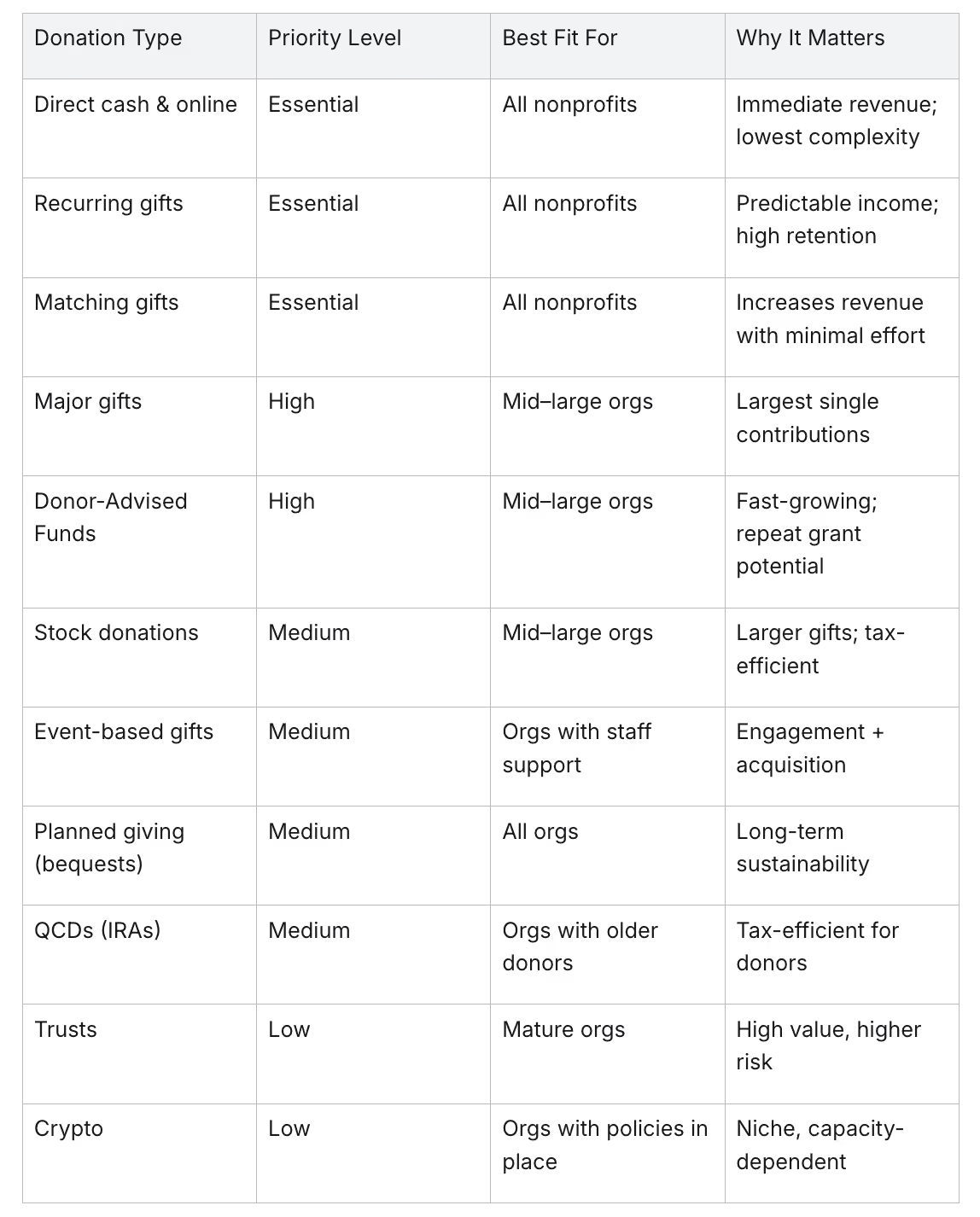
How to Use This Matrix
- Start with “Essential” donation types to stabilize revenue
- Add “High” priority types as staff and systems mature
- Introduce “Medium” and “Low” priority types intentionally, based on donor demand and risk tolerance
No organization needs to support every option. The goal is alignment, between donor preferences, operational capacity, and fundraising strategy.
Maximizing Fundraising Revenue: Strategic Implementation
Understanding donation types is only useful if nonprofits know how to operationalize them. Maximizing fundraising revenue depends on disciplined execution, aligning donor outreach, internal processes, and stewardship with the ways donors prefer to give.
Understand Donor Motivations and Segment Accordingly
Different donation types align with different donor motivations. Some donors prioritize immediacy and convenience, others value tax efficiency, and some are focused on long-term impact or legacy.
Nonprofits should segment donors based on factors such as:
- Giving history and frequency
- Average gift size
- Engagement level
- Known interests or life stage
For example, donors making small, consistent online gifts may be strong candidates for recurring giving, while long-term supporters with higher giving capacity may be better suited for major or planned giving conversations. Segmentation enables more relevant outreach and improves conversion across donation types.
Align Outreach and Messaging With Donation Types
Generic online fundraising appeals underperform when compared to targeted messaging. Outreach using an effective content strategy helps clearly connect the donation type being promoted with the donor benefit and the organizational impact.
Effective approaches include:
- Explaining tax advantages for stock gifts, QCDs, or DAFs
- Emphasizing long-term mission impact for bequests and legacy gifts
- Promoting convenience and consistency for recurring donations
- Educational content should be part of a broader content strategy tied to donor behavior and intent
Donation options should be easy to find across channels, particularly on the organization’s website, so donors can give in the way that best fits their preferences.
Streamline Processing and Administration
Operational friction can limit an organization’s ability to accept and steward diverse gifts. Clear internal procedures are essential for handling both simple and complex donation types.
Key considerations include:
- Documented processes for stock, DAF, and estate-related gifts
- Defined roles for acknowledgment and stewardship
- Use of software or partners to reduce manual handling
Choosing the right fundraising tools improves donor experience and trust, reduces errors, and allows fundraising staff to focus on relationship-building rather than transaction management.
Use Technology and Data to Guide Decisions
Modern fundraising tools play a central role in scaling diversified giving. Many nonprofits rely on modern fundraising platforms, such as Donately, to centralize donor data, manage recurring giving, support multiple donation types, and reduce administrative overhead without sacrificing flexibility.CRM and fundraising platforms support:
- Donor tracking and segmentation
- Recurring gift management
- Identification of major and planned giving opportunities
- Performance analysis by donation type
Data should be used to evaluate which donation types are driving revenue, where donors are engaging most, and how resources should be allocated.
Prioritize Stewardship to Sustain Giving
Revenue growth is driven by retention as much as acquisition. Stewardship should reflect the type of gift and the donor’s relationship with the organization.
Examples include:
- Personalized updates for major and planned gift donors
- Regular impact reporting for recurring donors and general donor data
- Timely, accurate acknowledgments for asset-based gifts
Consistent, relevant stewardship builds trust, encourages repeat giving, and supports long-term donor loyalty.
Building a Diversified Funding Model
A diversified fundraising program does not happen by accident. It requires intentional planning, realistic assessment, and ongoing adjustment to ensure donation types are aligned with organizational capacity and donor behavior.
Assess Organizational Capacity First
Before expanding fundraising efforts, nonprofits should evaluate their ability to support additional donation types without creating operational strain.
Key areas to assess include:
- Fundraising staff capacity and expertise
- Technology and data systems
- Administrative and compliance processes
- Board and leadership support
This assessment helps organizations prioritize donation types that are feasible now, while identifying gaps that may need to be addressed before expanding further.
Integrate Donation Types Into the Fundraising Plan
Diversification should be embedded in the organization’s overall fundraising strategy, not treated as a separate initiative.
Effective planning includes:
- Setting clear goals by donation type
- Defining ownership and timelines
- Allocating staff time and budget accordingly
Examples may include growing recurring revenue, formalizing a planned giving education effort, or implementing a process for accepting asset-based gifts. Plans should be reviewed regularly and adjusted based on performance and capacity.
Measure Performance and Adjust the Revenue Mix
Tracking performance by donation type allows nonprofits to focus resources where they have the greatest impact.
Useful metrics include:
- Growth in recurring donors
- Average gift size by donation type
- Conversion rates for specific appeals
- Volume of planned giving inquiries
Regular review ensures the fundraising mix remains balanced, responsive to donor behavior, and resilient over time.
Clarify Leadership and Staff Roles
Diversified fundraising requires organization-wide participation.
- Boards and board members play a key role in advocacy, relationship-building, and strategic support
- Executive leadership sets priorities and ensures alignment
- Staff can identify donor opportunities and reinforce giving options in day-to-day interactions
Clear expectations and shared ownership help normalize diverse giving across the organization.
Conclusion
Sustainable nonprofit fundraising requires more than cash donations alone. Organizations that support multiple donation types, ranging from recurring and major gifts to asset-based and planned giving, are better positioned to reduce risk, increase revenue stability, and align with how donors prefer to give.
Each donation type serves a distinct role. Some support immediate operating needs, others unlock larger, tax-efficient contributions, and long-term giving options strengthen future sustainability. When nonprofits understand these differences and integrate them intentionally, fundraising becomes more predictable, scalable, and resilient.
Building a diversified funding model is not about adopting every donation option at once. It requires honest assessment of organizational capacity, clear prioritization, and consistent measurement. With leadership alignment, appropriate systems, and thoughtful donor stewardship, nonprofits can expand their fundraising approach without adding unnecessary complexity.
A diversified revenue strategy ultimately gives nonprofits greater control over their financial future, allowing them to focus less on uncertainty and more on delivering impact, now and over the long term.
Let's Fundraise Together!
Sign up today and see why thousands of organizations trust Donately to manage their online fundraising.
.webp)