
Fundraising software for nonprofits with chapters and affiliates
Affiliates raise their own money. Donately gives each one its own accounts and gives the national office a roll-up view across all of them, with native sync into the CRM you already use.

Quick answer
How does Donately work for chapters and affiliate organizations?
Donately gives each affiliate its own donation pages, campaigns, and events. It also provides the national office a roll-up view listing every sub-account with what it raised, its donor count, and the revenue split. It syncs natively with Salesforce (standard or NPSP), HubSpot, Virtuous, and Mailchimp, so affiliates can launch without replacing their CRM or marketing tools.
What a chapter or affiliate organization actually needs from fundraising software
Two things at once, and most tools can't provide them both. Those two needs only conflict when the software makes them conflict.
Affiliates need independence
Each affiliate raises independently, so it needs its own donation pages, its own campaigns, its own events, and the ability to change a headline on Tuesday for an appeal that was decided on Monday. A workflow where a chapter files a request with headquarters and waits is a workflow where the chapter stops asking.
The national office needs visibility
Not control of the asking, but sight of the result: what each affiliate raised, how many donors it reached, what the revenue split comes to, and a way into any affiliate's account when a question needs answering.
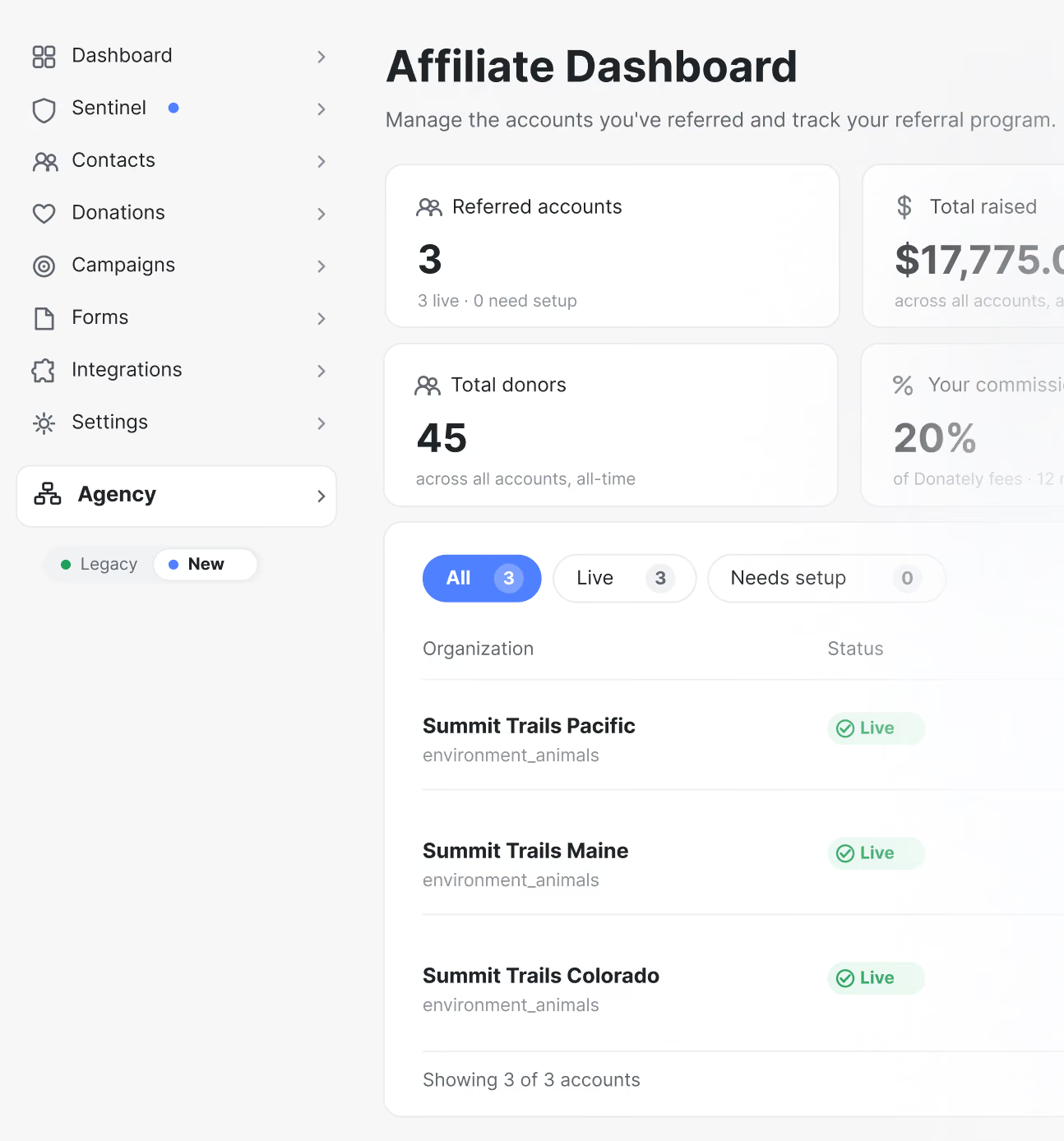
One view across every affiliate
The national office gets a roll-up view, with every sub-account listed in a table on that page. Admins of a given sub-account get a link straight into it from that same table.
Two national organizations already doing this
Outward Bound: one backbone, many locations
Outward Bound has used Donately as the backbone for giving across multiple locations, tied to Salesforce and organized so both local and national teams can manage the critical components of their fundraising ecosystem.
United Way: national campaigns, local giving
United Way has used Donately nationally to connect cross-market campaigns to local giving, while local United Ways have used it to power their own websites and critical campaigns.
Keep the CRM. Change the donation layer.
Donately syncs natively with Salesforce (standard or NPSP), HubSpot, Mailchimp. Anything else connects through Zapier, including Copper, Neon, Zoho, ActiveCampaign, and Google Sheets. The API covers the rest.
So the CRM question and the donation page question are separate decisions. You do not have to decideon a CRM migration at the national level before a chapter in Ohio can publish a campaign page.
How the Salesforce sync works
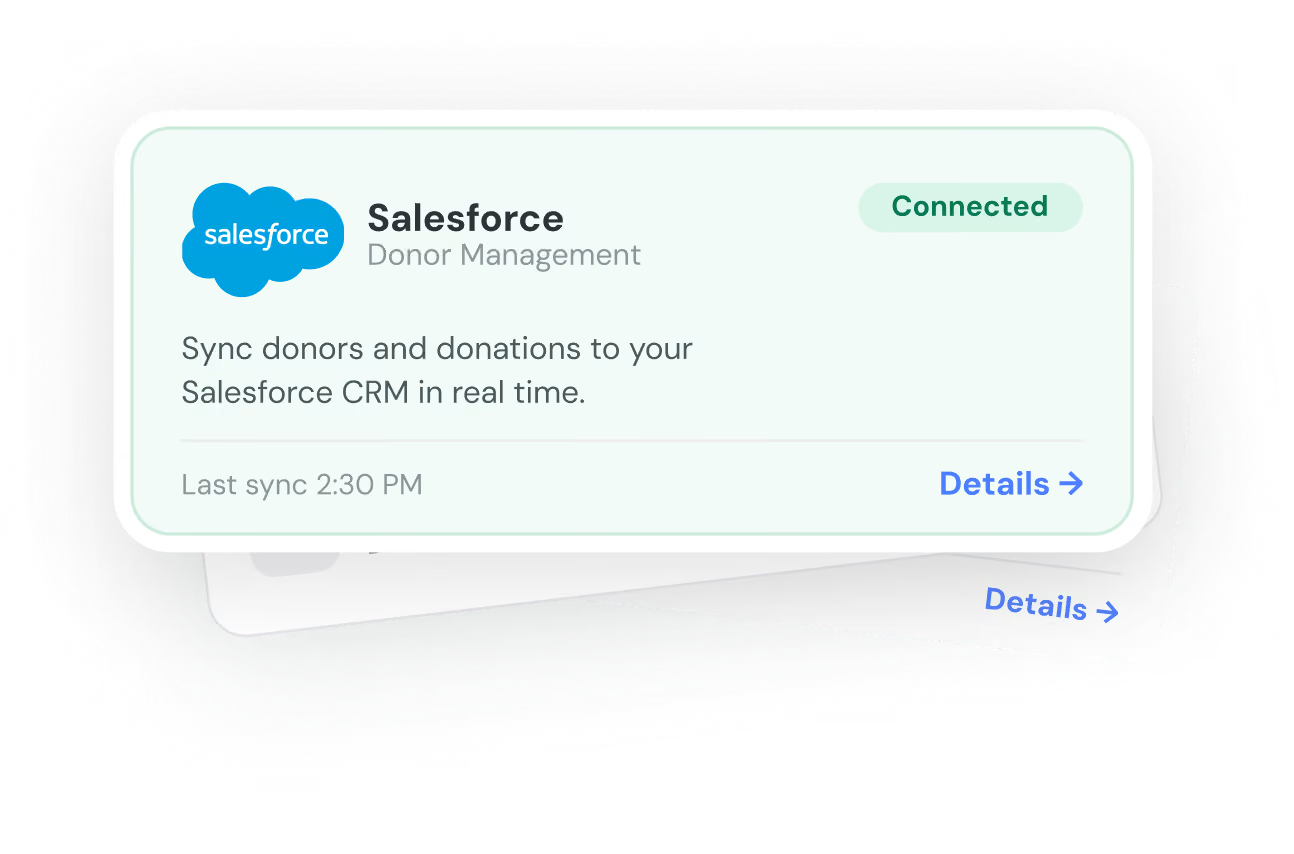
Recurring giving runs inside Donately, and every individual transaction is pushed into Salesforce as it happens. What the sync writes is configurable, so you set the objects, events, and triggers to match how your instance is already built rather than reshaping your org around a fixed mapping. The schedule, the retries, and the donor's own management of their gift stay in one place, and the record of each gift lands where your development team already works.
What an affiliate can put live this week
None of these require the national office to agree to replace a database first.
For one appeal, built from a template so the structure is right before anyone writes a headline.
Supporter pages inherit the campaign's styling as a set, so colors and branding applied to the campaign carry across every page and form under it.
For a local gala, run, or volunteer day.
For a disaster or emergency appeal, which is the one thing that never waits for a planning cycle.
Run on Donately and reported into your CRM.
Run workplace giving on Donately
Workplace giving peaks from September through November and closes out with your year-end campaigns. Each affiliate gets a campaign page customized to the company or the cause, peer-to-peer fundraising so employees raise from their own networks, and recurring giving for donors who keep going after it ends.
The campaigns a chapter actually runs
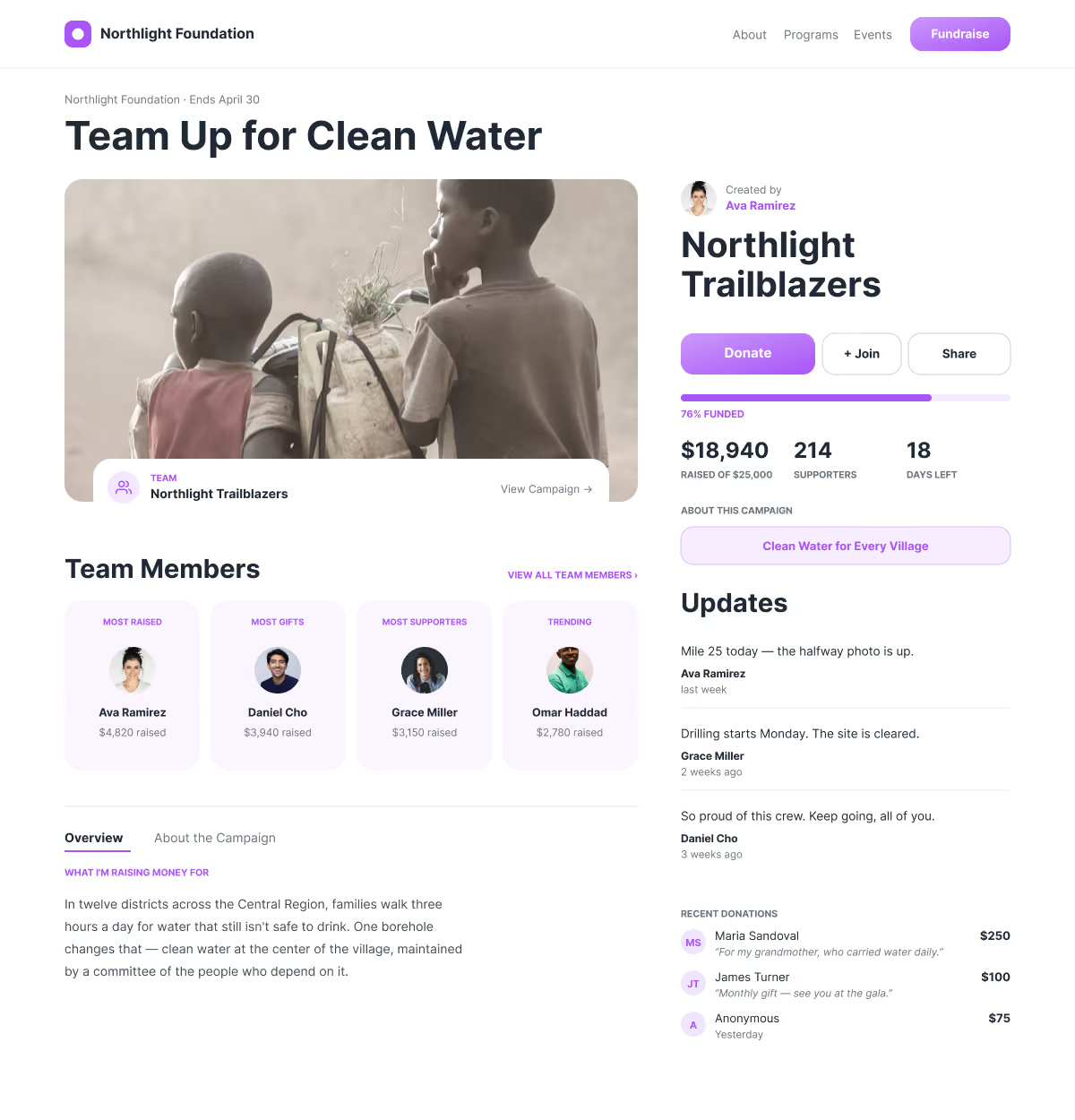
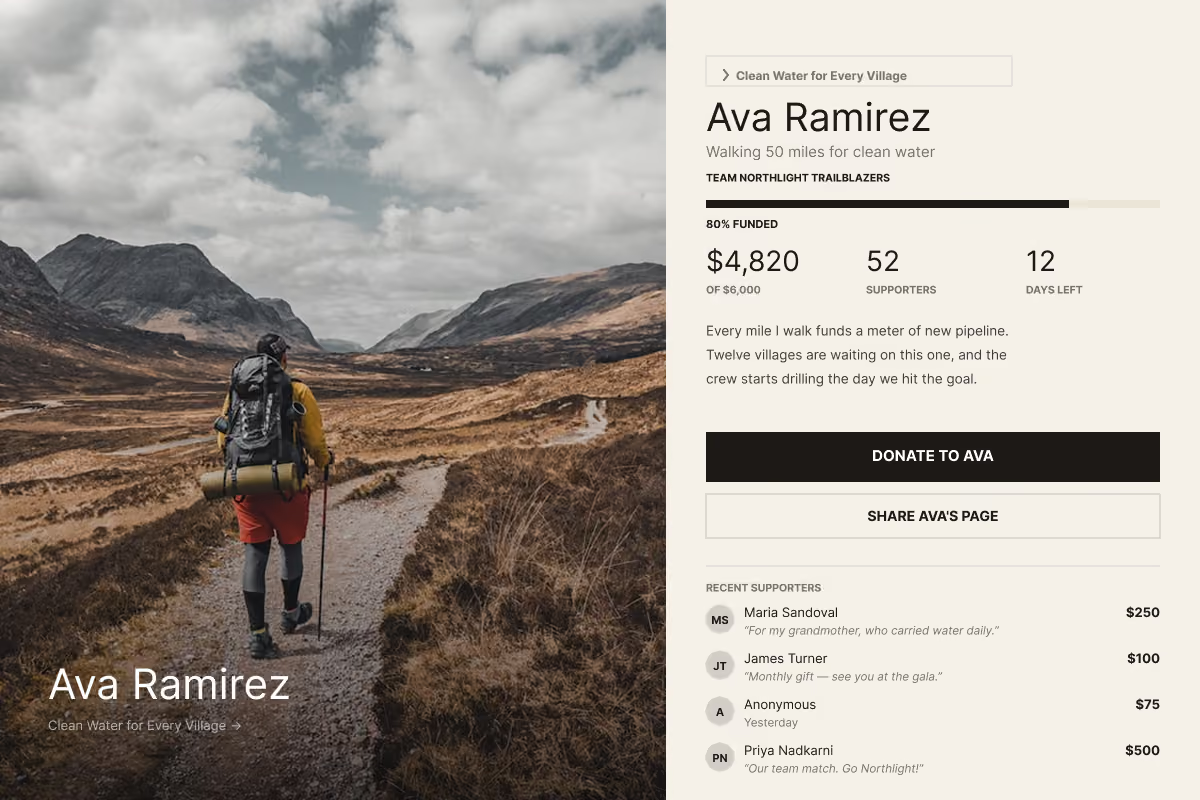
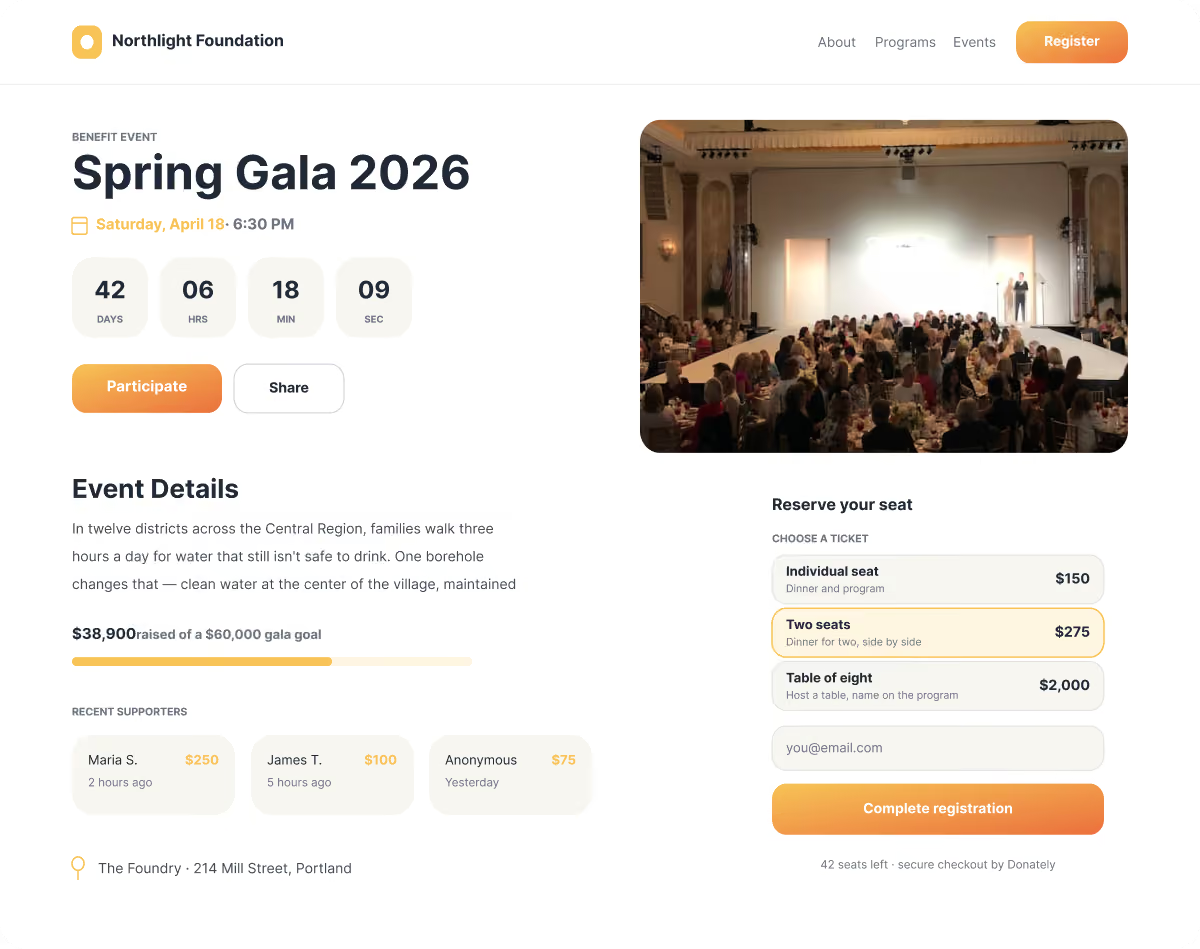
A corporate partnership gets a page customized to the company and the cause, with peer-to-peer fundraising so employees raise from their own networks. Disaster relief gets a surge page, which is the one thing that never waits for a planning cycle. Seasonal fundraisers reuse the template with new art and a new goal instead of a rebuild. Each is built from the same template, so the structure is right before anyone writes a headline.
How to roll this out across affiliates
Start with one affiliate
Ideally one with an active campaign and a willing fundraiser, rather than the largest one.
Use your affiliate link to add and invite chapters and local organizations
Affiliates do not inherit national branding, so each chapter styles its own pages.
Agree what flows to the CRM
And who checks it in the first month.
Add affiliates in cohorts
So the first round of questions gets answered before it is asked fifty times.
Review after one campaign cycle
Measure the dollars raised per affiliate rather than adoption.
Frequently asked questions
Can each affiliate have its own donation pages?

Do we have to replace our CRM to use Donately?
No. Donately syncs natively with Salesforce, HubSpot, Virtuous, and Mailchimp, and connects to the rest through Zapier or the API. The donation layer and the system of record are separate choices.
Does the Salesforce sync handle recurring gifts?
Recurring giving runs inside Donately, and each individual gift is pushed into Salesforce as it is processed. The objects, events, and triggers the sync writes to are configurable, so the integration fits an instance you have already customized.
What does it cost per affiliate?
The same as any other account. Each organization signs up on whichever tier fits it, and there is no affiliate surcharge. If a federation wants a single arrangement across its network, that is something we will put together on request rather than a published package.
How quickly can an affiliate publish a campaign page?
Most organizations have a page live in under ten minutes once the styling exists. The long part is not the tool, it is deciding what the campaign is about.
See the roll-up view with your own affiliates in it.
Start with one affiliate, and review after one campaign cycle on dollars raised.